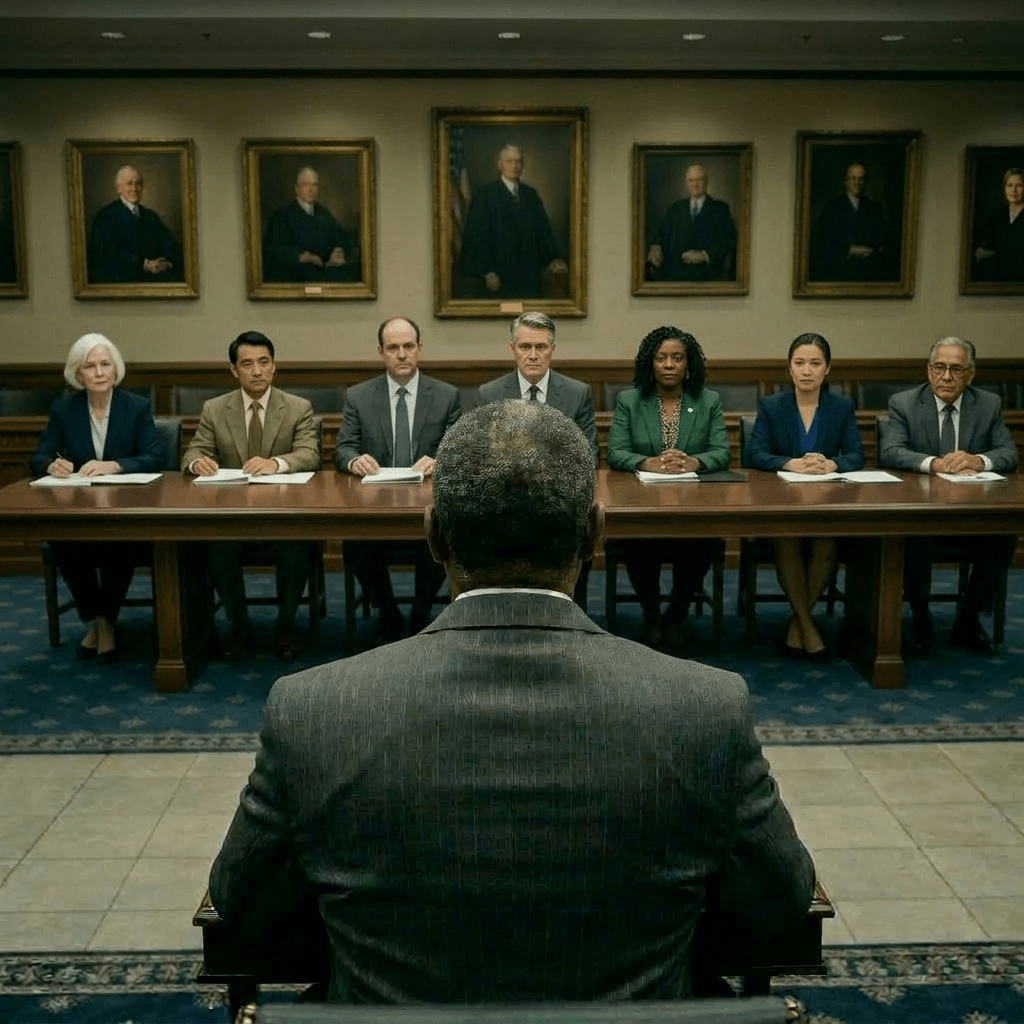
I write this article to share lessons drawn from personal experience. It is directed to every person who holds a professional license, whether in law, medicine, engineering, accounting, real estate, or any other regulated field. A professional license can take decades to build, yet misconduct, neglect, or repeated lapses in judgment can bring a career to a halt. The consequences do not end with the loss of a credential. They reach into livelihood, reputation, emotional health, social standing, and one’s sense of identity.
In light of this, every licensed professional must pay close attention to the rules that govern the privilege to practice. Those rules are not technical obstacles placed in the way of success. They are the conditions under which trust is earned and maintained. They protect the public, preserve the integrity of the profession, and safeguard the license holder from the kind of collapse that can follow when professional obligations are neglected.
My own experience taught me this lesson in the hardest way.
I became a lawyer in 1978 in Malawi. Early in my career, I worked in the Ministry of Justice, where I rose to the position of Chief State Advocate. That work required discipline, legal judgment, and a strong sense of public duty. In 1986, I received training in law report editing and publishing at Trinity College, Oxford University, in England. That opportunity deepened my respect for legal method, legal writing, and the careful development of jurisprudence.
In 1988, I came to the United States and continued my legal studies at American University, where I earned a Master of Laws Degree. I then undertook the demanding process of qualifying for practice in the United States. I took and passed the Virginia Bar Examination in 1997 and was admitted to the Virginia Bar in January 1998. I took and passed the Maryland Bar Examination in 1999 and was admitted to practice in Maryland that same year. In 2005, I was admitted to the District of Columbia Bar.
My admissions extended beyond state bars. I was also admitted to practice before the Supreme Court of the United States, the United States Court of Appeals for the Fourth Circuit, the United States District Court and Bankruptcy Court for the District of Columbia, the United States District Court and Bankruptcy Court for the Eastern District of Virginia, and the United States District Court and Bankruptcy Court for the District of Maryland.
Those admissions reflected years of study, preparation, discipline, and professional growth. They also reflected trust. Courts do not admit lawyers casually. Admission carries with it an expectation of competence, diligence, honesty, communication, and fidelity to duty.
Over the years, I built a successful general law practice. I represented clients before the United States Court of Appeals for the Fourth Circuit, the Supreme Court of Virginia, the Supreme Court of Maryland, the Court of Appeals of the District of Columbia, the Circuit Courts and District Courts of Maryland, the Circuit Courts and District Courts of Virginia, and the Superior Court of the District of Columbia. I also represented clients in immigration matters before the Board of Immigration Appeals and the Department of Homeland Security.
My immigration work took me to immigration courts in Maryland, Virginia, New York, New Jersey, Georgia, Florida, Texas, Kansas, Ohio, and Massachusetts. Those appearances reflected a broad and active practice. They also reflected the confidence that clients place in counsel when they entrust serious matters to a lawyer. In many immigration cases, the stakes are unusually high. A client may face family separation, removal, loss of lawful status, or the permanent disruption of a life built over many years. Representation in such matters requires care, preparation, urgency, and sustained communication.
For a long time, my career suggested depth of study, breadth of experience, and substantial professional achievement. That is precisely why the collapse that followed was so severe. Professional experience, even extensive experience, does not excuse ethical failures. Years in practice do not place anyone above the rules. A long résumé does not protect a professional who fails to meet basic duties.
My law practice came to a halt in March 2016, when the Supreme Court of Maryland suspended me indefinitely, with the right to seek reinstatement after 60 days. The suspension arose from ethical violations I committed in 2010 and 2011 in the representation of two immigration clients. Following that suspension, reciprocal consequences affected other admissions as well. I still have not been reinstated.
My case has been widely reported. I do not recount it to dispute the findings. I accept full responsibility for my actions. I recount it because it carries a message that licensed professionals need to hear clearly: when you depart from the rules of your profession, the consequences can outlast the underlying misconduct by many years.
Among other findings, the Supreme Court of Maryland determined that I violated Maryland Lawyers’ Rules of Professional Conduct 1.1 and 1.3 in representing one client in an immigration matter. I filed an application for a green card with United States Citizenship and Immigration Services that contained inaccurate statements. Some spaces were left blank. I failed to attach essential supporting documents, including the identification page of the client’s passport. When USCIS scheduled the client for an interview regarding her application, I failed to prepare her for the interview, failed to advise her what to expect, failed to appear at the interview, and failed to request that USCIS reschedule it. After USCIS denied the client’s applications for a green card and for a waiver of inadmissibility, I failed to pursue an appeal.
The Court also determined that I violated Rules 1.1 and 1.3 in my representation of another immigration client. I failed to prepare that client for her asylum hearing. I failed to advise her of the benefits and risks of postponing her case. I failed to explain the type of evidence she needed. I failed to submit corroborating evidence on her behalf, including evidence that her family members had been persecuted in her home country. I also failed to review the Baltimore Immigration Court file to ensure that it was complete.
The Court further determined that I violated Rules 1.4(a)(2) and 1.4(a)(3) in representing the first client. On three occasions, USCIS requested additional documents from me, yet I failed to inform the client of those requests. After the client called to ask about the status of an appeal, I promised to call her back, but I failed to update her. On at least ten occasions during the representation, the client came to my office because I was not answering her telephone calls.
The Court also determined that I violated Rule 1.4(b) in representing the second client because I failed to advise her of the benefits and risks of postponing her case. In addition, the Court found that I violated Rule 8.4(d) in my representation of the two clients. In essence, the findings established that I failed to provide competent and diligent representation, and that I failed to communicate adequately with the clients whose matters I had undertaken to handle.
These were not minor departures from ideal practice. They were serious breaches of professional duty. Competence is not optional. Diligence is not optional. Communication is not optional. A professional may possess intelligence, training, long experience, and a history of courtroom appearances, yet still fall below the basic standards required by the license he holds. That is what happened in my case.
I accept total responsibility for conduct that breached ethical standards. I also apologized to the Court and to the State of Maryland for the financial burden, inconvenience, and disruption that my misconduct caused to the Court, the Attorney Grievance Commission, the Office of Bar Counsel, the legal community, and the citizens and residents of the State of Maryland.
What followed taught me the true cost of losing a professional license.
The first consequence was the loss of income. When a license is the foundation of one’s livelihood, suspension or disbarment does not merely affect status. It cuts off the means of earning a living in the field to which one has given years of education, labor, sacrifice, and identity. The bills do not pause. Financial obligations do not disappear. Yet there is no ordinary safety net. One may discover, painfully and abruptly, that there are no unemployment benefits waiting to cushion the fall.
The second consequence was shame. That shame is difficult to describe fully. It does not remain confined to legal proceedings or written opinions. It follows you into ordinary life. It changes how you enter a room. It changes how you speak to former colleagues. It changes whether you wish to attend social gatherings at all. Many people never read the judgment. They do not study the facts, the findings, or the context. They hear that a professional lost a license, then they assume the worst about character, integrity, and worth. Even when the formal discipline relates to specific acts and specific failures, public perception can be much broader and much harsher.
That shame often leads to withdrawal from social circles. A person begins to retreat, not always because others openly reject him, but because embarrassment makes ordinary interaction painful. It becomes easier to stay away than to answer unspoken questions, endure speculation, or feel the silent judgment that may or may not be present. The isolation can become heavy.
The third consequence was the loss of social status. A professional license carries more than legal authority to practice. It shapes how society sees you. It shapes how family, friends, clients, and colleagues understand your place in the world. When that license is lost, a public identity built over decades can weaken very quickly. What once seemed secure begins to feel fragile. Respect that took years to establish can diminish with alarming speed.
The fourth consequence was emotional and psychological pain. This pain does not pass quickly simply because one admits fault. Acceptance of responsibility is necessary, but it does not erase grief. It does not remove regret. It does not silence the repeated mental review of missed duties, neglected details, ignored calls, incomplete files, and opportunities to correct course before matters became disciplinary charges. There is suffering in recognizing that harm to clients could have been avoided. There is suffering in knowing that a long career can be overshadowed by failures that should never have occurred. There is suffering in waking up to a life that no longer resembles the one built through years of disciplined work.
The suffering can also be practical. A person who has spent decades in one profession may find it difficult to begin again elsewhere. Skills do not always transfer easily in the market. Reputation does not move intact from one field to another. I entered real estate and mortgage work, and I continue to strive to build a path forward. Even so, rebuilding after the loss of a legal career is not easy. Starting over later in life requires humility, stamina, patience, and acceptance of a reality one never expected to face.
That is why I offer this article as a word of caution, especially to people who hold professional licenses and may assume that serious consequences happen only to reckless or dishonest people, or only to those early in their careers. That assumption is dangerous. Misconduct can grow out of neglect, poor systems, delay, inattention, failure to follow through, or repeated breakdowns in communication. It can arise in the course of ordinary work. It can develop in matters that at first seem manageable. It can happen to someone with long experience, impressive credentials, and a history of substantial professional accomplishment.
No one should think that experience alone will save him. No one should assume that prior success creates immunity. No one should believe that a respected title, years of practice, or admission to major courts will excuse failure to perform basic duties. The rules of professional conduct apply every day, in every matter, with every client.
For that reason, licensed professionals must take special care to know the rules governing their licenses, to respect those rules, and to follow them strictly. Prepare thoroughly. Communicate promptly. Keep accurate records. Respond to requests. Meet deadlines. Review files carefully. Advise clients clearly about risks, benefits, and options. Do not assume that an unresolved issue will somehow correct itself. Do not allow silence, delay, or disorganization to become routine.
A professional license is hard to obtain. It is easy to underestimate how vulnerable it can be. Once it is lost, the consequences may spread far beyond the disciplinary order itself. They may affect income, identity, emotional stability, social relationships, and the course of the rest of one’s working life.
I learned these lessons through painful experience. I share them in the hope that others will not have to learn them the same way. Let every licensed professional treat the governing rules of the profession with seriousness, humility, and constant attention. The cost of failing to do so can be far greater than most people imagine.
 Site Title
Leave a comment